February is one of the strongest all-round months in the Amboseli safari calendar. It sits in the dry window between the short rains (October to December) and the long rains (March to May), when conditions are warm, relatively dry, and highly favourable for both wildlife viewing and Kilimanjaro visibility.
For travellers planning a first Amboseli safari or looking for a month that balances quality with less peak-season demand than July or August, February is one of the most straightforward recommendations.
Weather in February
February in Amboseli is warm and largely dry. Average high temperatures are around 29 degrees Celsius, with cooler nights dropping to around 17 to 18 degrees. Rainfall is low — typically lower than January — making February one of the cleaner months for game drives and overall safari logistics.
The vegetation at this point in the dry window retains some green character from the short rains but is progressively drying as the month advances. The result is visibility that is better than the wet months but with a landscape that has not yet reached the stark dryness of August. Some areas retain soft green patches while the plains open up for clear animal observation.
Mornings can be cool on the vehicle, particularly in the first hour before sunrise, but days warm quickly. This layering dynamic — cool dawn, warm midday — is typical of the best Amboseli months.
Wildlife in February
Wildlife observation in February is very good. The combination of relatively dry conditions, short vegetation in the open zones, and reliable swamp-based elephant movement makes for efficient game drives.
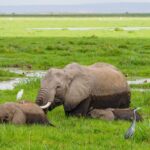
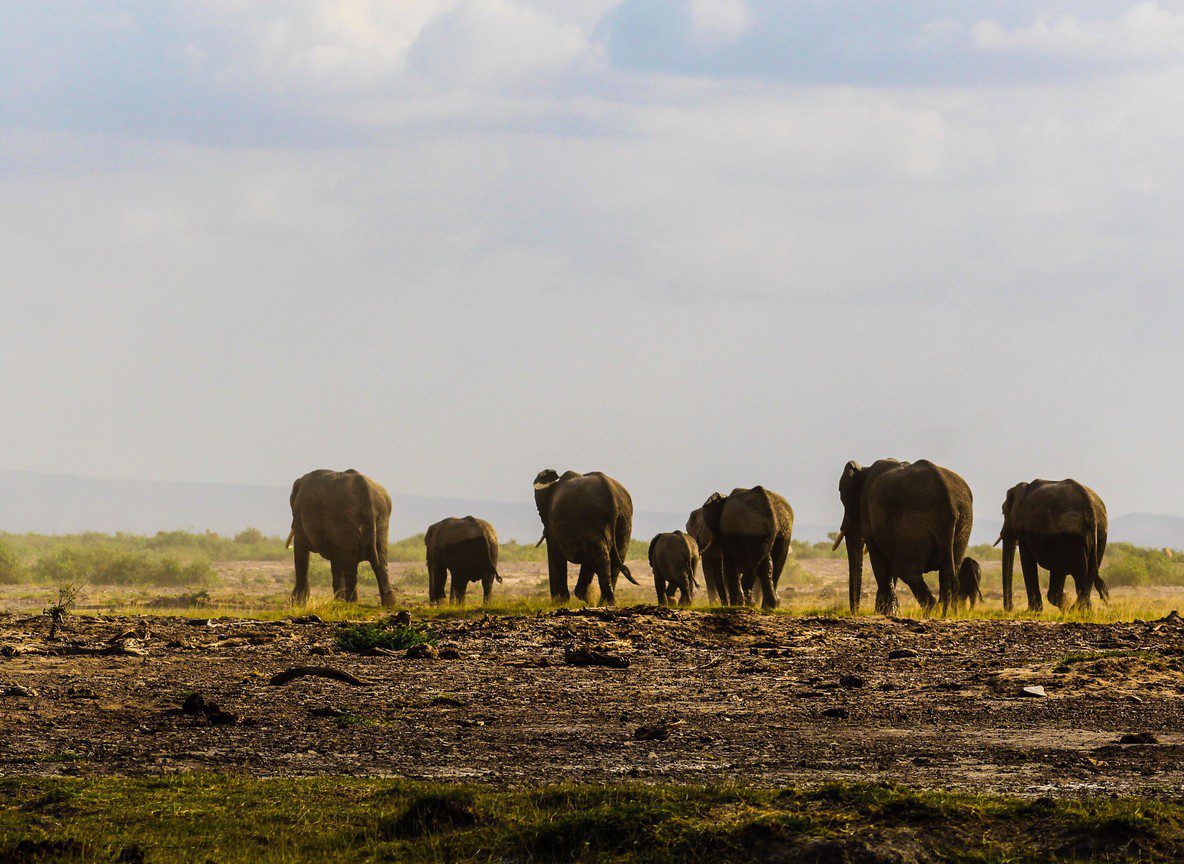
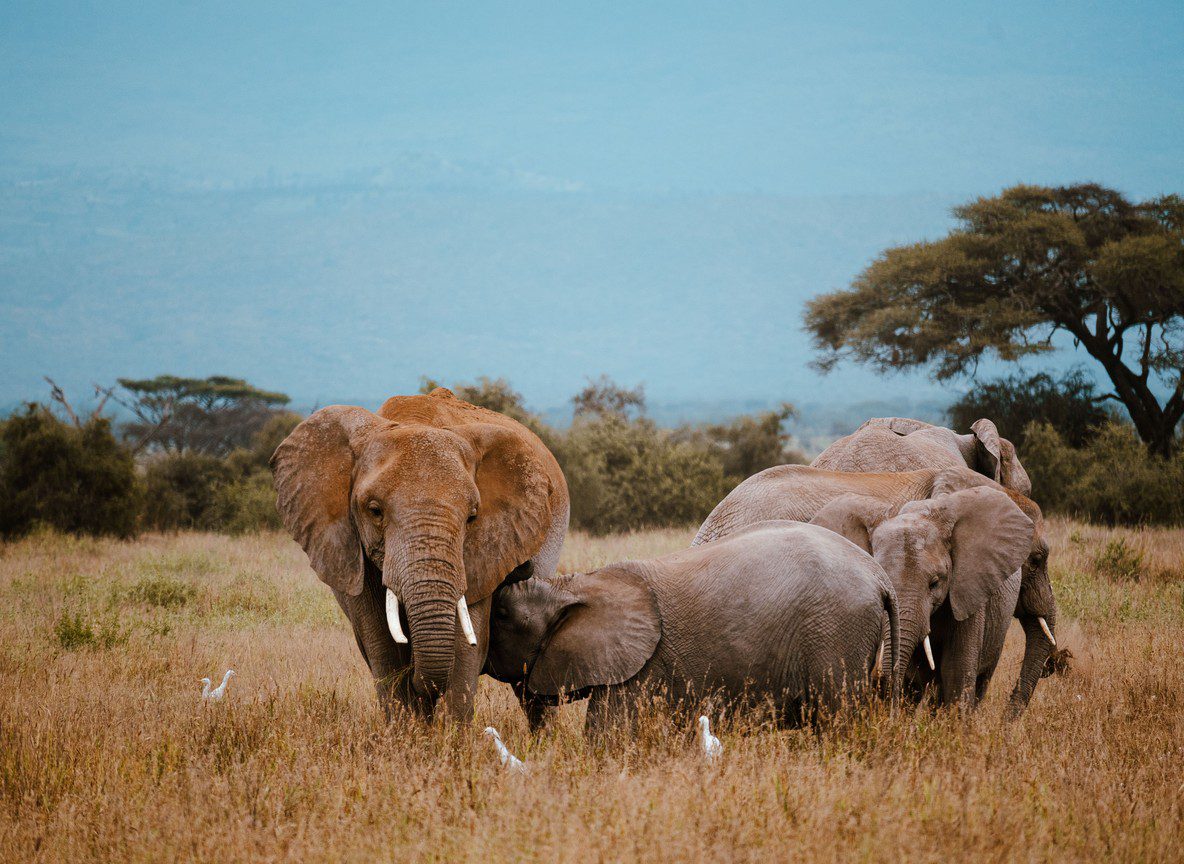
Elephants: February is an excellent month for elephant viewing. The herds remain closely associated with the swamp systems and are reliably encountered in large numbers. Breeding herds with calves are often present — the green-to-dry transition months see ongoing calf activity following births in the preceding green season.
Big cats: Lions are regularly encountered on the swamp margins and grassland edges. Short vegetation improves search conditions significantly compared to the long-grass months. Cheetahs use the open plains periodically.
Birds: February is a good birding month. Palearctic migrants are still present — they typically depart through March and April — so the species count is higher than in the core dry months of August and September. Wetland species remain strong at the swamp margins.
Other mammals: Zebra, wildebeest, buffalo, and giraffe are all present and visible on the open grassland and swamp edge circuits.
Kilimanjaro Views in February
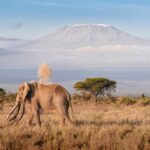
February is one of the strongest months for Kilimanjaro visibility. The low humidity, clear atmospheric conditions, and absence of convective afternoon cloud in the early morning create a reliable window for mountain photography and views.
Clear dawn reveals of the full summit are achievable on most mornings in a typical February. The mountain is not guaranteed on every day — cloud still forms at altitude periodically — but the probability of seeing Kilimanjaro clearly at least once in a two-to-three night stay is very high.
February is particularly noted for the quality of the clear mornings: the low-angle early light on the mountain’s snow cap against a blue sky, with elephants moving across the swamp in the foreground, is the defining visual of the classic Amboseli experience.
February vs January
Both months sit in the dry window and deliver similar overall quality. The distinctions are subtle:
January tends to have slightly more residual greenness from the preceding short rains. The landscape has a softer, fresher feel. Some travellers prefer this for the visual richness it adds to the otherwise open dry-season character.
February tends to be drier and clearer. Visibility is marginally better on average. The conditions are more straightforwardly “dry season” in character, which suits travellers who want maximum wildlife visibility over landscape lushness.
Neither is significantly better than the other. January can feel slightly more variable in its first half as the residual short-rains influence fades. February is more settled across the whole month.
February for First-Time Visitors
February is one of the safest months to recommend for first-time Amboseli visitors. The combination of reliable wildlife, strong mountain potential, and easy planning logistics means the park consistently delivers what most first-time safari travellers come to see.
Unlike April (demanding and atmospheric), or the December festive period (variable and busy), February asks little from the traveller in return for a strong experience. The drives are efficient, the elephants are there, and the mountain cooperates on most mornings.
How Many Nights in February
Two nights works well for a focused February safari, particularly as part of a longer Kenya circuit. Two mornings and two afternoons gives four game drives and enough time for the park to deliver its highlights.
Three nights is better for photographers and for travellers who want to experience the park at a slower pace with time to stay longer at interesting sightings. Three mornings also provides meaningful redundancy for Kilimanjaro views — if one dawn is overcast, you have two more chances.
February at a Glance
| Factor | February Conditions |
|---|---|
| Rainfall | Low — one of the driest months |
| Wildlife visibility | Very good — short vegetation, reliable herds |
| Kilimanjaro views | Very strong |
| Road conditions | Firm and easy |
| Crowd levels | Moderate — below July/August peak |
| Best for | First-time visitors, photographers, couples |
| Value | Better than peak dry-season months |
Packing for February
February is a straightforward packing month:
- Warm layer for dawn drives — the first hour on an open vehicle before sunrise can be cold
- Light neutral clothing for daytime
- Sun hat and sunscreen
- Binoculars
- Camera dust protection for afternoon drives when some tracks are dry
No rain gear required in most February visits, though a light packable jacket is worth carrying.
For more on Amboseli timing across the year, see the Amboseli animals month-by-month guide and the Kenya January vs February guide on Touring Insights.
Every trip described here can be tailored: dates, budget, camps, and pace built around you.
Get a Personalised Safari